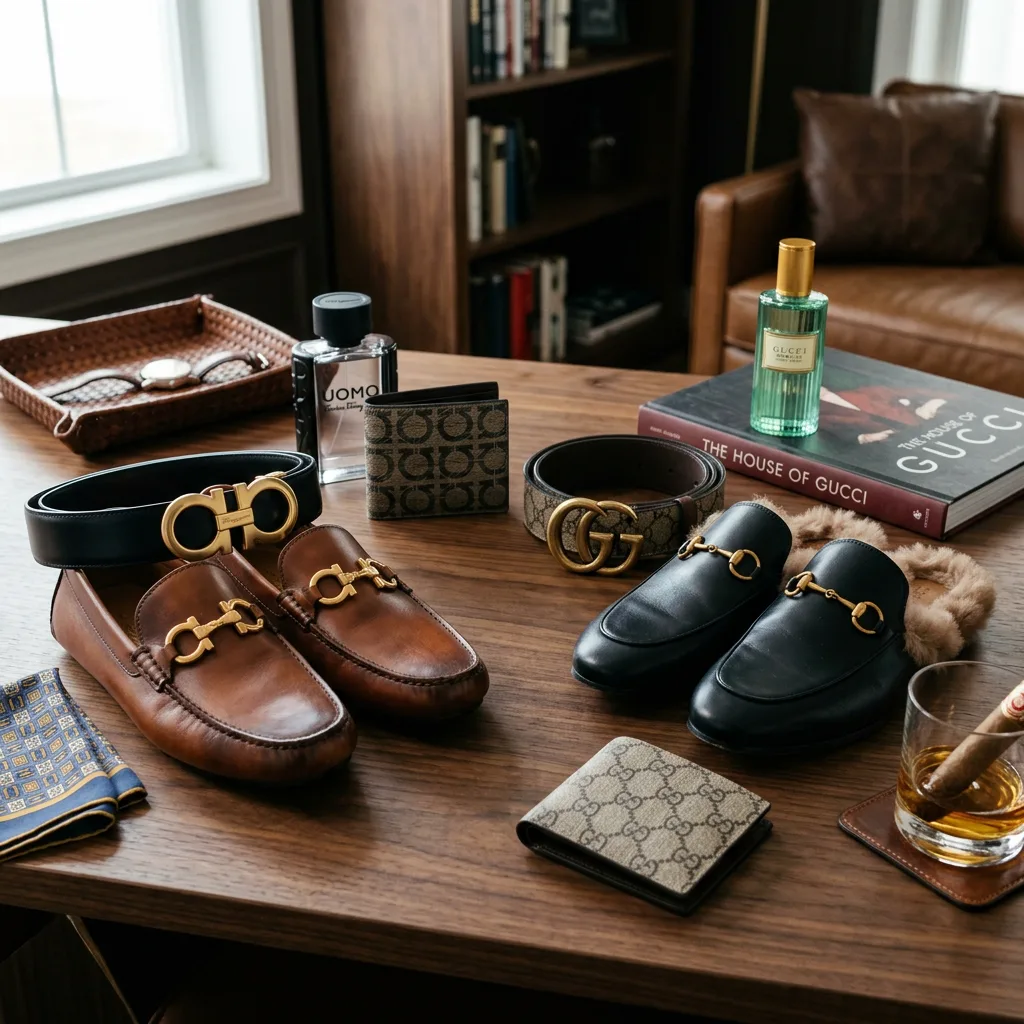
Ferragamo and Gucci have both been making men’s loafers for longer than most luxury houses have existed, and both do it well. They are not, however, making the same shoe for the same man. One is built around comfort and longevity; the other is built around recognition.
If you are about to spend four figures on a pair of loafers, here is how they actually compare across the six things that matter.
Echelon Collective is a participant in the Amazon Services LLC Associates Program. As an Amazon Associate we earn from qualifying purchases. This costs you nothing and never influences what we recommend. Full details on our affiliate disclosure page.
Design
Ferragamo works in understatement. The Gancini bit is small, the lines are clean, and the shoe disappears into tailoring rather than competing with it. It sits comfortably with a suit, dress trousers, chinos, or dark denim.
Gucci works in recognition. The Horsebit loafer is one of the most identifiable shoes ever made, and recent collections lean further into chunky soles, larger hardware, and visible branding. That is the point of them.
Verdict: a genuine tie. Ferragamo for shoes nobody comments on, Gucci for shoes people recognize across a room.
Comfort
Ferragamo is the clear winner and has been for decades. Cushioned leather insoles, supportive construction, and a wider range of widths mean most men can wear them for a full day out of the box.
Gucci needs breaking in. The leather is often softer but the lasts are narrower and less forgiving. Once molded they are comfortable; the first two weeks are not.
Verdict: Ferragamo, decisively.
Craftsmanship
Both use Italian leather and skilled makers. The difference is priority. Ferragamo optimizes for consistency — pairs bought years apart fit the same. Gucci optimizes for the collection, which means quality is excellent but design and materials shift season to season.
Verdict: a slight edge to Ferragamo for consistency.
Durability
Ferragamo loafers hold their shape through heavy rotation, which is the real test. Gucci loafers last too, but softer uppers and trend-led constructions show wear sooner on some models — worth checking construction before buying.
Either way, durability is mostly down to you. Cedar shoe trees after every wear and leather conditioner every few months matter more than the badge on the insole.
Verdict: Ferragamo.
Versatility
Ferragamo covers business, formal, and smart casual without adjustment. Gucci covers business casual through to luxury streetwear but looks out of place with conservative tailoring.
The honest test is your calendar. If you wear a suit most weeks, Ferragamo integrates. If your wardrobe leans toward designer denim and statement outerwear, Gucci fits better.
Verdict: depends on your wardrobe, not on the shoe.
Price
- Ferragamo: roughly $700–$1,100 for most men’s loafers.
- Gucci: roughly $900–$1,300 and upward depending on collection.
Prices move; check current figures before committing. On a cost-per-wear basis Ferragamo usually wins, because the comfort means you actually reach for them.
Verdict: Ferragamo on value.
Which Should You Buy
Choose Ferragamo if you
- Wear business attire regularly
- Prefer understated luxury
- Want all-day comfort without a break-in period
- Value consistency across repeat purchases
- Intend to keep the shoes for years
Choose Gucci if you
- Want recognisable designer hardware
- Prefer fashion-forward proportions
- Dress in luxury casual more than tailoring
- Want a shoe that carries the outfit
- Follow seasonal collections
The Verdict
For the best overall luxury loafer, Ferragamo takes it. Comfort, consistency, durability, and a design that will look correct in ten years make it the smarter investment for most men.
Gucci remains an excellent shoe with real prestige — it is simply answering a different question. If your aim is quiet luxury, Ferragamo is hard to beat.
Before You Spend Four Figures
Two things are worth doing first. Get the fit right in person if you possibly can — loafers have no laces and no adjustment. And buy the care kit at the same time as the shoes, not a year later when the damage is done: shoe trees, a horsehair brush, and cream polish in a matching shade.